Anthropogenic Landscapes of Inequality

6-7 January 2020 // Systems of Social and Technological Organization
Maria Paula Diogo, Liliana Coutinho, José Augusto Pádua

One of the critiques by historians to the concept of Anthropocene is its ahistoricity and the assumption that human society is/was a homogeneous, flat and free-floating reality. In this seminar we propose to bring to the forefront of the debate the divide between those who explore and those who are explored, by focusing on the role of European colonial science, technology and medicine — anchored in a global worldwide epistemology based on the Baconian idea of progress and growth — in changing the very concept of ecology, both in colonial and post-colonial periods.

We argue that the process of domestication of overseas territories is critical to understand and discuss, from an historical perspective, the concept of Anthropocene. Large technological systems – railways, roads, dams, urbanization, sanitation – allowed for the successful implementation of new agricultural, commercial and demographic maps in colonial settings, thus designing unbalanced landscapes of prosperity and poverty in a global scale that are still visible (and maintained) today in post-colonial contexts. We propose to center the discussion on a stratigraphy of values carved in the long-durée trend by which global techno-scientific epistemology based on the concepts of progress, growth, naturalization of technology and commodification of nature became the hegemonic worldview. Based on this hegemonic view, nature became a human construction (or destruction, for that matter) and this paradox is now perceived as the “new normality.

Open Activities

Alongside the seminars, Anthropocene Campus Lisboa: Parallax includes a set of activities open to the public. Please keep checking the site for updates.

Open Keynote Lectures

Speakers

Scott Knowles

7 January 2020
(Tuesday) 18h30

Dipesh Chakrabarty

9 January 2020
(Thursday) 18h30

Exhibitions

The Anthropocene Campus Lisboa: Parallax includes several exhibitions and performances open to the public, taking place at Culturgest.

Exhibition by Aidan Koch

@Foyer of the Main auditorium, Culturgest

More details soon.

Guarda-Rios — Exhibition by West Coast Collective

@dedicated room, Culturgest

More details soon.

Movie Showcase

More details soon.

Dipesh Chakrabarty

9 JANUARY 2020 (Thursday), 18h30 // Keynote Lecture

Ten years ago, historian Dipesh Chakrabarty published “The Climate of History: Four Theses,” the first of several Anthropocene-focused articles that proved to be as enduringly influential as they are controversial. Criticised for supporting a species-level universality that disregards class, race, and gender in the shaping of humanity’s ecological footprint, apparently at odds with his background in postcolonial theory, Chakrabarty’s “Four Theses” brought about an extensive discussion on who is the “Anthropos” in Anthropocene—and how the socio-economic and political divide between the global North and South factors into the interlocking threats endangering humans and non-humans on Earth. More recently, Chakrabarty has called for a shift in human modes of being and knowing, asking whether the humanities can “overcome their hallowed and deeply set human-centrism and learn to look at the human world also from nonhuman points of view”.

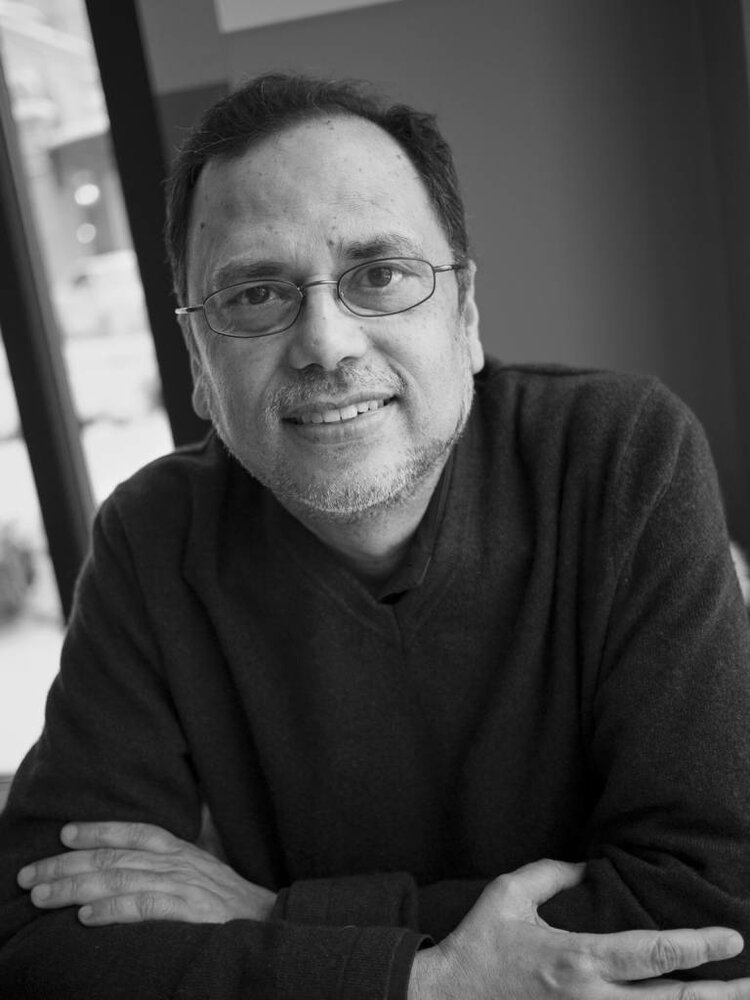
Dipesh Chakrabarty (1948, Calcutta, IN) is professor of History and South East Studies at Chicago University. The author of Provincializing Europe (2000) and a leading historian in the area of postcolonial studies, in the last decade he penned several influential articles on climate change and the Anthropocene, including “The Climate of History: Four Theses” (2009), “Postcolonial Studies and the Challenge of Climate Change” (2012), “Climate and Capital: On Conjoined Histories” (2014), and “Humanities in the Anthropocene: The Crisis of an Enduring Kantian Fable” (2016). In 2014, Chakrabarty received the Toynbee Prize in recognition of his significant contributions to global history.